

These are often gypsum crystals
Walk across certain desert landscapes and you may notice something unusual: small, glittering white stones scattered across the ground. These are often gypsum crystals — sometimes as small as sand grains, other times as large as gravel. But how do these relatively heavy crystals move across seemingly flat desert surfaces?
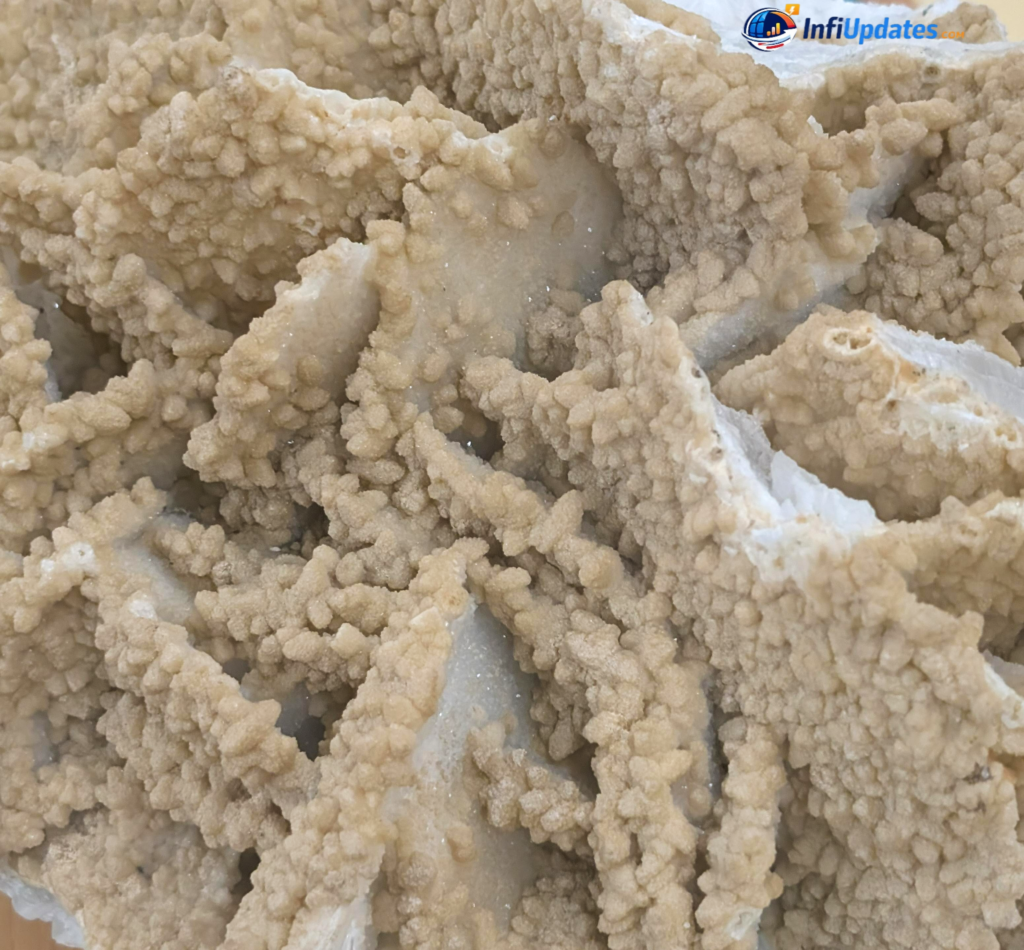
The answer lies in a fascinating combination of wind, water, temperature shifts, and the unique physical properties of gypsum itself.
What Is Gypsum?
Gypsum is a soft sulfate mineral made of calcium sulfate dihydrate. It forms when mineral-rich water evaporates, leaving crystalline deposits behind. In desert regions, especially in dried lakebeds known as playas, gypsum can accumulate in significant quantities.
One of the most famous examples is White Sands National Park, where vast dunes are composed almost entirely of gypsum crystals rather than traditional quartz sand.
Unlike quartz, gypsum is softer and slightly more soluble in water, which influences how it forms and moves.
The Power of Wind
The primary force that moves gravel-size gypsum crystals is wind.
Deserts often experience strong, consistent winds capable of lifting and pushing particles across the surface. This process, known as saltation, involves particles bouncing or hopping along the ground.
Here’s how it works:
- Wind lifts smaller sand grains into the air.
- These grains collide with larger gypsum crystals.
- The impact nudges the crystals forward.
- Repeated collisions gradually move them across the desert floor.
Even if the gypsum crystals are too heavy to be lifted directly, wind-driven sand acts like a natural conveyor system..
Occasional Water Flow
Although deserts are dry most of the year, sudden rainstorms can temporarily flood playa surfaces. When water evaporates, it leaves behind fresh gypsum deposits.
Shallow water flow can also shift crystals slightly before drying again. While wind remains the dominant force, water contributes to short-distance movement and redistribution.
Over time, repeated wet-dry cycles reshape the surface.
Thermal Expansion and Surface Instability
Desert environments experience extreme temperature differences between day and night. Rocks and minerals expand in heat and contract in cooler temperatures.
These daily cycles can:
- Loosen crystals from compacted soil
- Break larger formations into smaller pieces
- Make surface particles easier for wind to move
This subtle process prepares crystals for transport.
Unique Properties of Gypsum
Gypsum has characteristics that make its movement distinct:
- It is lighter than many other minerals
- It can fracture into smaller pieces
- It dissolves slightly and recrystallizes
In places like White Sands, gypsum forms dunes similar to traditional sand dunes. Wind constantly reshapes these dunes, carrying crystals across vast distances over time.
Because gypsum does not absorb heat as much as darker minerals, it also influences airflow patterns near the ground, subtly affecting movement.
Long-Term Landscape Changes
The movement of gypsum crystals is not random chaos. Over years and decades, wind patterns create:
- Ripple formations
- Crescent-shaped dunes
- Layered sediment deposits
These patterns reveal prevailing wind directions and seasonal variations.
Scientists study these formations to better understand desert dynamics, climate patterns, and mineral transport processes.
A Slow but Powerful Process
At first glance, it may seem unlikely that gravel-sized crystals could move at all. Yet deserts are far from static landscapes.
Wind erosion, particle collisions, and periodic flooding combine to produce steady, gradual movement. While a single crystal might shift only a few centimeters in a storm, over years it can travel significant distances.
Nature operates patiently — reshaping entire terrains one grain at a time.
Why It Matters
Understanding how gypsum crystals move helps researchers:
- Study desert ecosystem stability
- Predict dune migration
- Analyze sediment transport
- Interpret geological history
These insights also assist in managing protected areas and understanding how climate changes might influence desert environments.
Gravel-size gypsum crystals may appear motionless under the desert sun, but they are part of an ongoing natural journey. Wind-driven sand, rare rainfall, and extreme temperature changes collaborate to shift these shimmering fragments across dry landscapes.
The desert is not still — it is quietly in motion.
The next time you see sparkling white crystals scattered across a desert floor, remember: each one has traveled, shaped by forces both gentle and persistent, telling a story written in wind and time.