
creating fresh uncertainty about the future of wolves living both inside and near the park
Wolves have long symbolized wilderness in the American West. Nowhere is that image stronger than in and around Yellowstone National Park, where gray wolves were reintroduced in the mid-1990s after decades of absence. Their return reshaped ecosystems, revived tourism interest, and became one of the most studied wildlife recovery stories in the world.
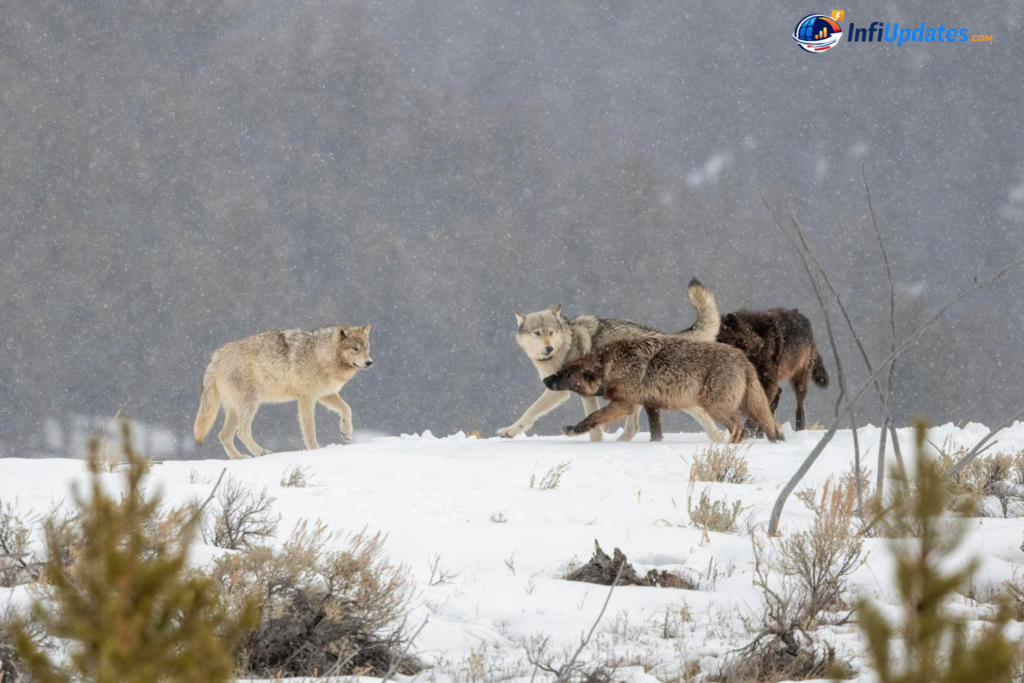
Yet in recent years, new challenges have emerged — creating fresh uncertainty about the future of wolves living both inside and near the park.
A Conservation Success Story
Gray wolves were eradicated from Yellowstone by the early 20th century due to hunting and predator control programs. In 1995 and 1996, wildlife officials reintroduced wolves to restore ecological balance.
The results were dramatic:
- Elk populations adjusted their grazing behavior
- Vegetation such as willow and aspen began recovering
- Beavers and other species returned
- Riverbank ecosystems stabilized
This “trophic cascade” became a landmark case study in conservation science.
Changing Management Policies
One of the most significant new pressures on wolves near Yellowstone comes from evolving state wildlife management rules outside park boundaries.
While wolves are protected within the national park, they often roam beyond its borders. Once outside, they may be subject to state-regulated hunting and trapping seasons.
Recent policy changes in neighboring states have expanded hunting opportunities in some areas. Supporters argue these policies help manage wolf populations and reduce conflicts with livestock. Critics express concern that aggressive harvest levels could affect well-known packs that draw tourists and researchers.
This difference in protection inside versus outside the park creates a complex management landscape.
Tourism and Economic Impact
Wolves are not only ecological influencers — they are economic drivers.
Wildlife watchers travel from around the world hoping to glimpse Yellowstone’s famous packs. Wolf tourism contributes millions of dollars annually to surrounding communities.
When wolves that frequently roam near park roads are harvested outside boundaries, it can impact visitor experiences and local businesses that rely on wildlife viewing.
Balancing economic interests with wildlife management adds another layer of complexity to the issue.
Genetic Diversity Concerns
Long-term conservation success depends on maintaining healthy genetic diversity. Wolves that move between protected and non-protected areas contribute to gene flow across regional populations.
If too many dispersing wolves are removed, scientists worry about:
- Reduced genetic variation
- Increased isolation of packs
- Long-term population vulnerability
Monitoring these trends requires ongoing research and cooperation between federal and state agencies.
Livestock Conflicts
Ranchers in areas surrounding Yellowstone sometimes report livestock losses linked to wolves. For rural communities, predator presence can create economic and emotional strain.
Wildlife agencies use various management tools, including:
- Compensation programs
- Non-lethal deterrents
- Targeted removal of problem animals
Finding solutions that protect both livelihoods and wildlife remains an ongoing challenge.
Climate and Habitat Pressures
Beyond hunting policies, environmental changes also pose risks.
Shifts in climate patterns may influence prey availability, migration routes, and habitat conditions. Wildfires and land development can fragment territories wolves rely on for survival.
These broader pressures compound the management debates already underway.
A Question of Balance
The story of wolves in and around Yellowstone reflects a broader national conversation about wildlife conservation. It raises questions such as:
- How should predator populations be managed outside protected areas?
- What balance should exist between state authority and federal conservation goals?
- How can communities, conservationists, and policymakers collaborate effectively?
There are no simple answers. Wolves are adaptable, but their survival depends on coordinated management across jurisdictions.
The Future of Yellowstone’s Wolves
Despite current concerns, wolves remain present in the Greater Yellowstone Ecosystem. Researchers continue tracking packs, studying behavior, and analyzing population trends.
The future of these animals will likely depend on:
- Continued scientific monitoring
- Policy adjustments based on data
- Constructive dialogue between stakeholders
- Public engagement and education
The wolf’s return to Yellowstone once symbolized ecological renewal. Preserving that legacy requires thoughtful, balanced decision-making.
The new threats facing wolves in and around Yellowstone are not rooted in a single cause but in a combination of policy changes, land-use pressures, and competing interests.
As one of the most iconic wildlife recovery stories in modern history, Yellowstone’s wolves represent both the promise and the complexity of conservation.
Protecting their future will require cooperation, careful science, and a shared commitment to sustaining the wild landscapes they call home.