
The topic “Scientists, Feeling Under Siege, March Against Trump Policies”
In moments of political tension, it is not unusual for citizens to take to the streets. But when scientists — a community often associated with laboratories, research papers, and universities — step into public demonstrations, it signals something deeper. The topic “Scientists, Feeling Under Siege, March Against Trump Policies” reflects a period when researchers across the United States voiced concerns about how government decisions could impact science, research funding, and environmental policy.
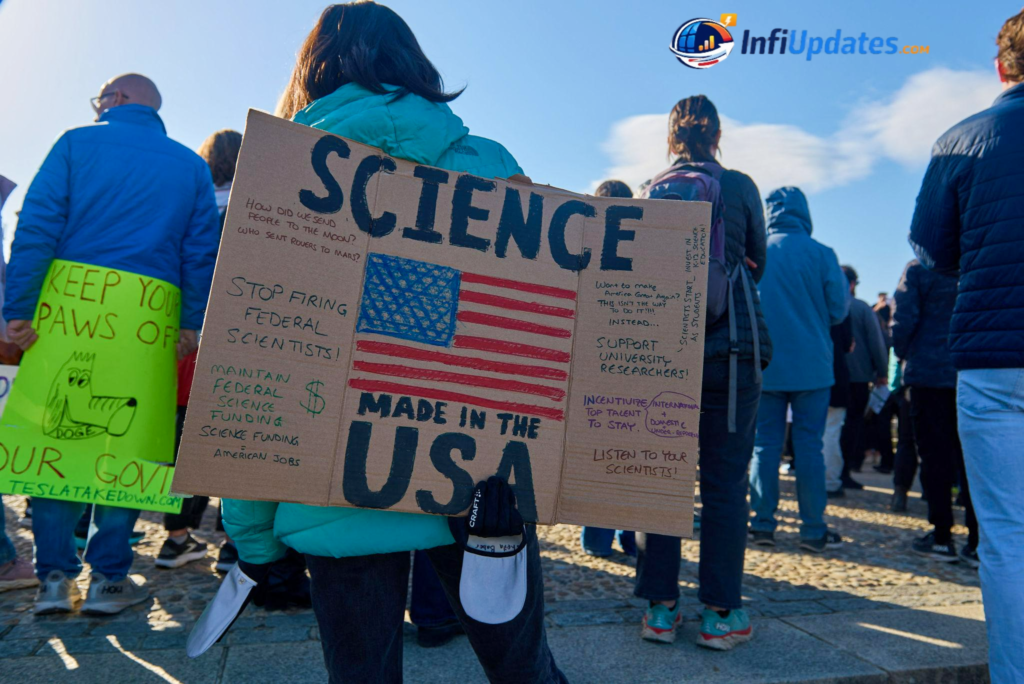
This blog explores the context behind such movements, the concerns raised by the scientific community, and what it means for democracy and public discourse.
Why Scientists Chose to March
During the presidency of Donald Trump, debates intensified around climate policy, environmental regulations, public health funding, and immigration rules affecting researchers. Many scientists expressed concerns that certain policy decisions could:
Reduce federal funding for research
Limit environmental protections
Restrict scientific data transparency
Affect international research collaboration
For many in academia and research institutions, these issues were not just political — they were professional and ethical.
The March for Science movement, which gained national and international attention, aimed to promote evidence-based policymaking and defend the role of science in government decisions.
The Role of Science in Public Policy
Science and public policy often intersect. From climate change to healthcare to technological innovation, governments rely on scientific expertise to guide long-term planning.
When researchers feel their findings are being ignored or misrepresented, frustration can build. In this case, scientists argued that:
- Climate research should influence environmental policy
- Public health recommendations should guide health reforms
- Research agencies should remain independent from political pressure
Their message was not necessarily partisan, but centered on the importance of facts, data, and peer-reviewed research in shaping laws and regulations.
Climate and Environmental Concerns
One of the most debated areas was climate policy. The Trump administration made significant changes to environmental regulations and withdrew the United States from the Paris Climate Agreement during that period.
Many climate scientists viewed these actions as setbacks to global environmental cooperation. They worried that rolling back certain regulations could:
- Increase carbon emissions
- Slow renewable energy investment
- Undermine long-term environmental research
These concerns became a key motivator for public demonstrations.
Research Funding and Federal Agencies
Federal agencies such as NASA, the Environmental Protection Agency (EPA), and the National Institutes of Health (NIH) play vital roles in advancing science. Budget proposals that suggested cuts to some research programs raised alarms in academic circles.
Researchers feared that reduced funding could:
- Slow innovation
- Impact young scientists and graduate students
- Limit breakthroughs in medicine and technology
For many, the marches were about protecting the future of scientific discovery rather than opposing a single political figure.
A Question of Trust
Another dimension of the protests centered on public trust. Scientists argued that when evidence is sidelined, public confidence in institutions may weaken.
Supporters of the administration, however, often viewed policy changes as part of broader economic or regulatory reforms. This highlights the complexity of balancing scientific advice with political priorities.
The situation underscored a larger democratic question:
How should governments weigh scientific expertise alongside economic, social, and political considerations?
The Broader Impact
The marches were largely peaceful and attracted participants from universities, research labs, healthcare sectors, and environmental organizations. Similar events occurred not only in Washington, D.C., but in cities worldwide.
The movement demonstrated that scientists, traditionally seen as neutral observers, can also become active participants in civic life when they feel core principles are at stake.
At the same time, it sparked debates about whether scientific communities should engage in political activism or maintain strict neutrality.
Science and Democracy
Healthy democracies rely on open debate. Scientists provide data and analysis; elected officials make policy decisions based on multiple factors. Tension can arise when interpretations differ.
The events surrounding these marches illustrate:
- The importance of transparent communication
- The need for collaboration between policymakers and researchers
- The value of protecting academic independence
Regardless of political perspective, the episode reinforced the idea that science plays a crucial role in modern governance.
The phrase “Scientists, Feeling Under Siege” captures a moment in recent American history when researchers believed their work and principles were being challenged. Their decision to march was not just about opposition, but about advocating for evidence-based decision-making and the long-term value of research.
Political administrations change over time, but the relationship between science and policy remains central to addressing global challenges — from climate change to public health crises.
Ultimately, the debate serves as a reminder that science, society, and politics are deeply interconnected. Open dialogue, mutual respect, and a commitment to facts remain essential in navigating that relationship.