
a race to redefine urban transportation.
For decades, flying cars existed only in science fiction — symbols of a futuristic world where traffic jams disappeared into the sky. Today, that vision is edging closer to reality. In Silicon Valley and beyond, technology startups and aerospace innovators are investing billions into electric vertical takeoff and landing aircraft (eVTOL), often described as the modern flying car.
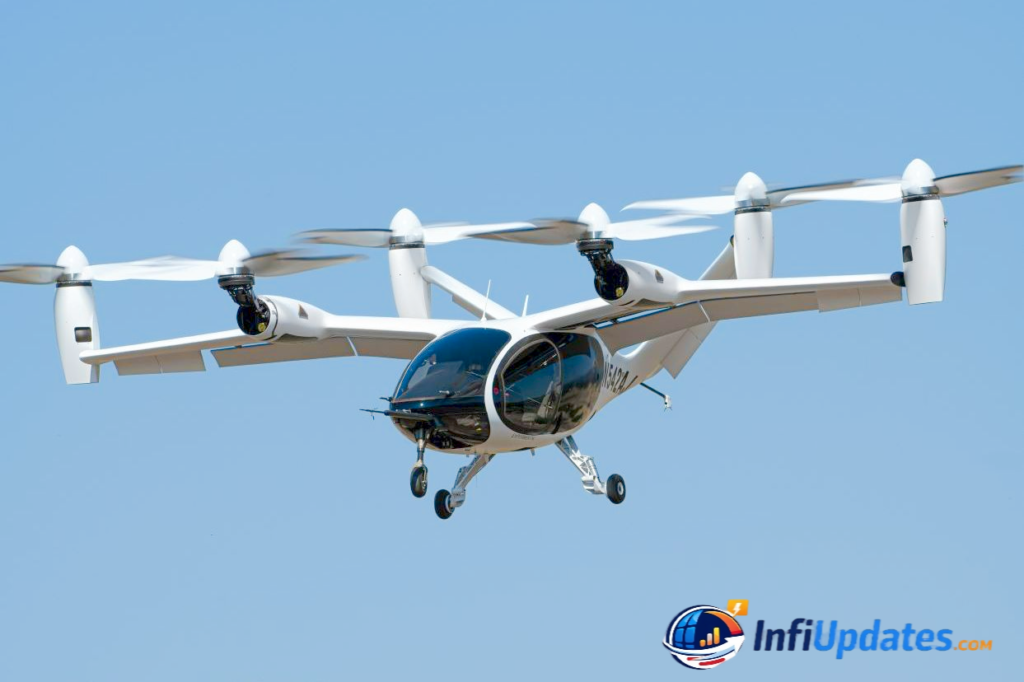
What was once a dream is now a race — a race to redefine urban transportation.
From Science Fiction to Startup Reality
Silicon Valley is known for transforming ambitious ideas into real-world industries. Just as it reshaped communication, commerce, and computing, it is now targeting mobility in three dimensions.
Companies are designing compact aircraft that:
- Take off and land vertically
- Run on electric power
- Operate more quietly than helicopters
- Carry two to six passengers
The goal? Urban air mobility — short-distance air travel within and between cities.
Who Is Building the Future?
Several companies are leading development in this emerging sector:
- Joby Aviation
- Archer Aviation
- Lilium
These firms are working on aircraft prototypes designed to function as air taxis. Some models are already undergoing flight tests, moving closer to regulatory approval.
Unlike traditional aircraft manufacturers, many of these startups blend software engineering, battery innovation, and aerospace design — a true Silicon Valley approach.
How Flying Cars Work
Modern flying cars are not cars with wings. Instead, most designs resemble advanced drones or compact aircraft.
They rely on:
- Multiple electric rotors for lift
- Lightweight composite materials
- High-capacity battery systems
- Autonomous navigation software
Vertical takeoff eliminates the need for long runways, allowing operation from rooftop “vertiports.”
Many companies aim to integrate artificial intelligence and automation to simplify piloting and enhance safety.
The Traffic Problem They Aim to Solve
Urban congestion costs cities billions of dollars annually in lost productivity and fuel consumption. As populations grow, ground infrastructure struggles to keep pace.
Flying cars promise:
- Reduced commute times
- Lower emissions compared to helicopters
- New transportation networks above cities
However, whether they will become widely accessible or remain premium services is still uncertain.
Challenges Ahead
Despite rapid progress, significant challenges remain.
1. Regulation
Aviation authorities must certify aircraft for safety. Regulatory approval takes time and rigorous testing.
2. Battery Technology
Electric aircraft require lightweight yet powerful batteries. Energy density limitations still constrain range.
3. Infrastructure
Cities would need vertiports, charging stations, and updated air traffic management systems.
4. Public Acceptance
Noise levels, safety concerns, and affordability will influence adoption.
The path to mainstream use depends on solving these issues carefully and responsibly.
Investment and Market Potential
Investors see enormous potential in urban air mobility. Analysts estimate that the industry could grow into a multi-billion-dollar market in the coming decades.
Partnerships with airlines and ride-sharing platforms are already forming. Some companies envision booking a flying taxi through an app, much like ordering a ride today.
If successful, this sector could reshape transportation in major metropolitan areas.
Environmental Considerations
Electric propulsion offers the possibility of lower emissions compared to traditional helicopters. However, overall environmental impact depends on:
- Electricity sources
- Battery production methods
- Manufacturing processes
Sustainable development will be crucial for long-term success.
A New Chapter in Transportation
The concept of flying cars once symbolized distant futurism. Today, it represents active engineering projects backed by serious funding and technical expertise.
Silicon Valley’s involvement has accelerated innovation, combining software intelligence with aerospace design.
While widespread adoption may still be years away, the progress made so far suggests that urban air mobility is moving from imagination toward implementation.
Flying cars are no longer confined to movie screens or speculative drawings. With companies like Joby Aviation and Archer Aviation advancing eVTOL technology, the dream is taking shape in testing facilities and flight trials.
Whether these aircraft become everyday commuting tools or niche transportation options remains to be seen. But one thing is clear: the future of mobility may soon extend beyond roads — into the open sky.