
scientists studying Antarctic ice cores are uncovering new insights
For decades, Antarctica has been viewed as a frozen archive of Earth’s climate history. Beneath its vast sheets of ice lies a detailed record of atmospheric changes, greenhouse gas levels, and environmental shifts stretching back hundreds of thousands of years. Today, scientists studying Antarctic ice cores are uncovering new insights — including evidence that plant growth across parts of the planet may be accelerating in response to climate change.
This discovery highlights the complex relationship between rising temperatures, carbon dioxide levels, and global ecosystems.
Ice Cores: Nature’s Climate Archive
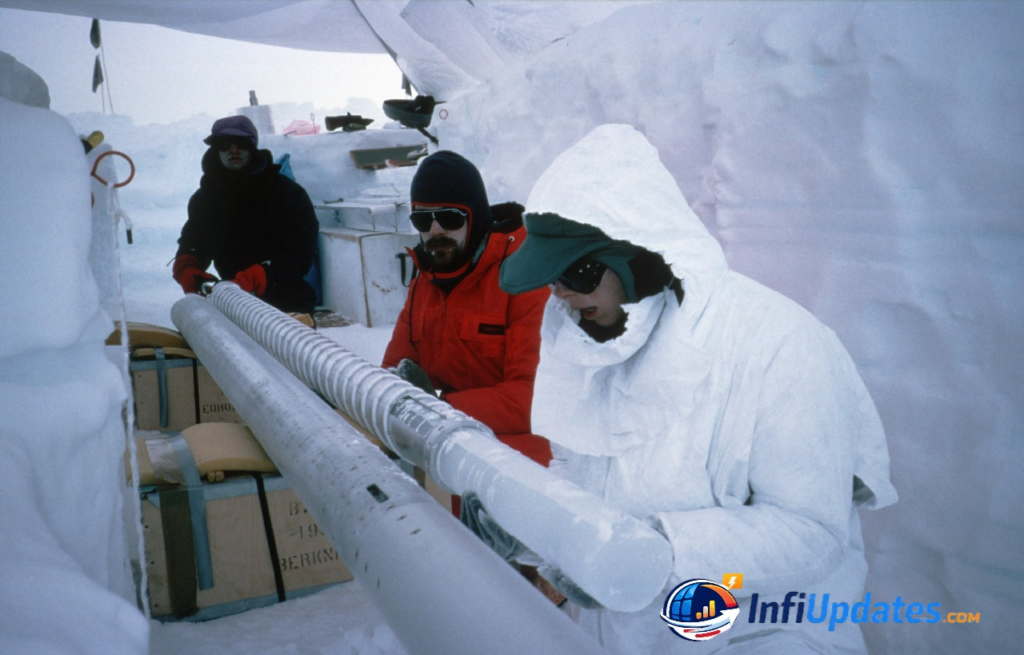
Antarctic ice cores are cylindrical samples drilled deep into glaciers and ice sheets. Each layer of ice represents snowfall from a particular year, trapping air bubbles and particles from the atmosphere at that time.
By analyzing these layers, researchers can measure:
- Historical carbon dioxide (CO₂) levels
- Methane concentrations
- Temperature variations
- Volcanic activity markers
- Dust and pollen traces
These frozen records help scientists reconstruct Earth’s environmental history and understand how ecosystems responded to past climate shifts.
Rising Carbon Dioxide and Plant Growth
One of the most significant findings from ice core research is the clear correlation between carbon dioxide levels and global temperatures. As CO₂ concentrations increase, global temperatures tend to rise.
Carbon dioxide is also a key ingredient in photosynthesis — the process plants use to convert sunlight into energy. In controlled environments, higher CO₂ levels often stimulate faster plant growth. This phenomenon is sometimes referred to as the “CO₂ fertilization effect.”
Satellite data over recent decades has shown an overall increase in vegetation cover in certain regions of the world. Researchers believe that elevated atmospheric CO₂, combined with longer growing seasons in some areas, may be contributing to this trend.
Evidence from Antarctica
While Antarctica itself remains one of the coldest places on Earth, certain coastal areas have experienced warming. In limited ice-free zones, scientists have observed:
- Expanding moss beds
- Increased microbial activity
- Greater biological productivity
Though plant life in Antarctica is minimal compared to other continents, even small changes in growth patterns provide valuable evidence of environmental shifts.
Ice core data, combined with satellite observations, suggests that Earth’s biosphere is responding dynamically to climate change — sometimes in unexpected ways.
A Complex Picture
It is important to understand that accelerating plant growth does not necessarily mean climate change is beneficial overall.
While some regions may experience temporary increases in vegetation, other areas face:
- Drought stress
- Extreme heat waves
- Soil degradation
- Wildfires
- Biodiversity loss
In tropical and arid regions, rising temperatures can actually reduce crop yields and damage ecosystems. Climate change impacts vary widely depending on geography, local weather patterns, and ecosystem resilience.
Longer Growing Seasons
In parts of the Northern Hemisphere, warmer temperatures have extended growing seasons. Spring arrives earlier, and frost occurs later in autumn. This allows plants more time to grow each year.
However, extended growing seasons can also disrupt natural cycles, affecting pollinators, wildlife migration, and water availability.
The Antarctic record helps scientists compare current warming trends to past climate events, giving perspective on how unusual today’s changes may be.
What This Means for the Future
The idea that plant growth is accelerating may sound encouraging at first glance. Increased vegetation can absorb more carbon dioxide from the atmosphere, potentially acting as a natural buffer against climate change.
Yet scientists caution that this effect has limits. As temperatures continue to rise:
- Nutrient availability may restrict plant growth
- Water scarcity may offset CO₂ benefits
- Ecosystem imbalances may emerge
In other words, the planet’s natural systems are adaptive — but not unlimited in their capacity to compensate.
The Importance of Ongoing Research
Antarctica remains one of the most critical regions for climate research. Continued ice core drilling and satellite monitoring help scientists refine climate models and improve predictions about future environmental changes.
Understanding how plant growth responds to rising CO₂ is essential for:
- Agriculture planning
- Food security strategies
- Carbon cycle modeling
- Biodiversity conservation
The frozen layers of Antarctica are not just records of the past — they are guides to the future.
Antarctic ice cores reveal that Earth’s climate system is deeply interconnected. Rising carbon dioxide levels are influencing temperatures, ecosystems, and plant growth patterns worldwide.
While some regions may experience accelerated vegetation growth, the broader implications of climate change remain complex and far-reaching. The findings remind us that environmental changes rarely produce simple outcomes.
The story hidden within Antarctic ice is not only about melting glaciers — it is about how life on Earth adapts, responds, and evolves in a rapidly changing world