
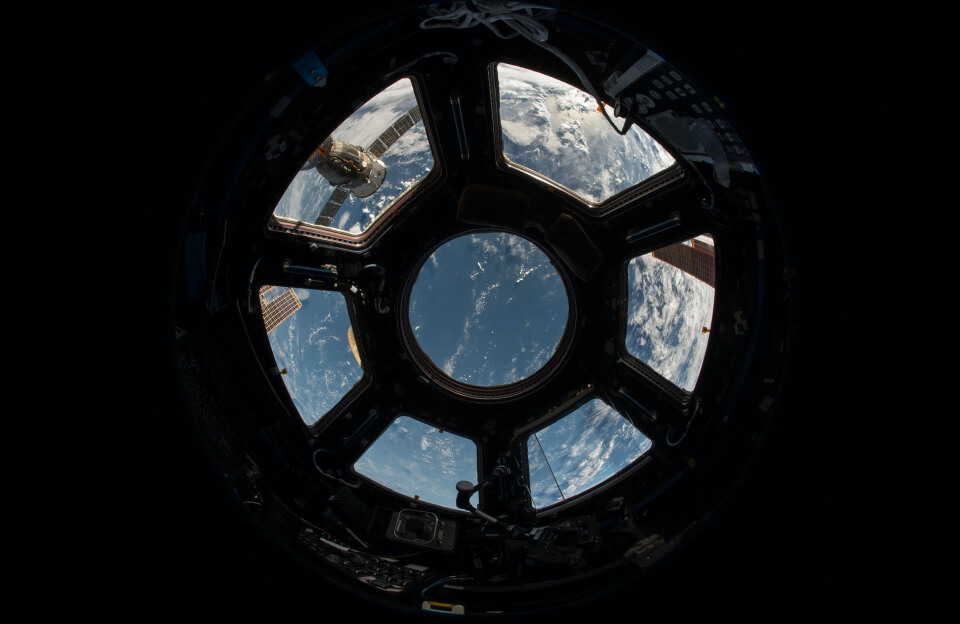
space is almost entirely empty.
When most people imagine space, they think of silence — a vast, empty vacuum where no sound can travel. Technically, that’s true. Sound waves need air or another medium to move, and space is almost entirely empty.
Yet during its historic mission around Saturn, NASA’s Cassini spacecraft captured something scientists describe as the “sounds” of space — signals that were later converted into audio for us to hear.
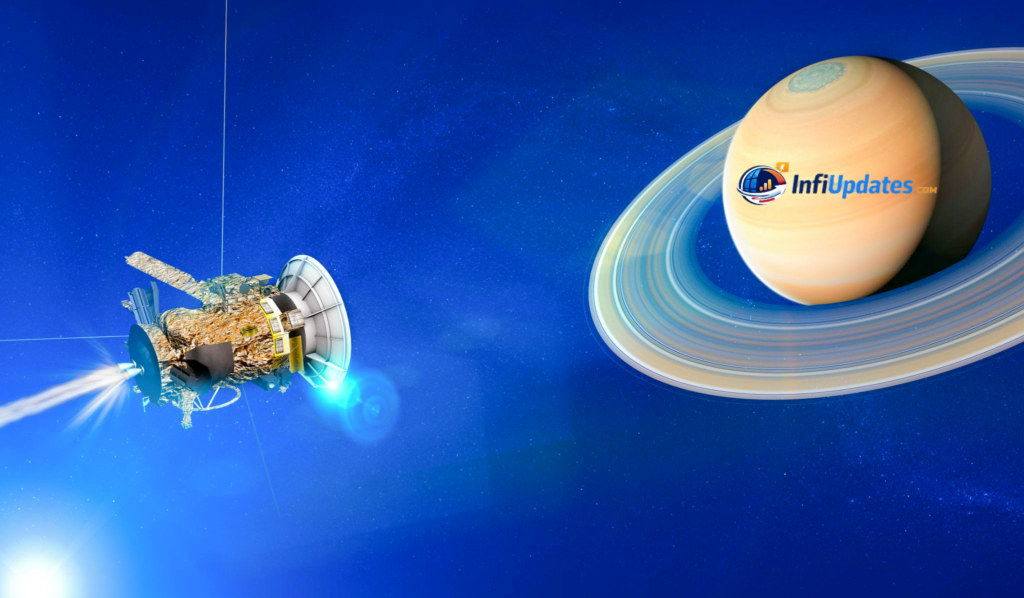
These recordings, taken as Cassini made its dramatic dives between Saturn and its rings, reveal a hidden symphony of plasma waves, charged particles, and magnetic energy.
Meet the Mission: Cassini at Saturn
The Cassini–Huygens mission launched in 1997 and arrived at Saturn in 2004. It spent over a decade studying the planet, its rings, and its moons, delivering groundbreaking discoveries.
In 2017, Cassini began its “Grand Finale” — a series of daring orbits that sent the spacecraft diving between Saturn and its inner rings before ultimately entering the planet’s atmosphere.
During these close passes, Cassini collected detailed data about Saturn’s magnetic field and surrounding plasma environment.
How Can Space Have “Sound”?
Space doesn’t carry sound the way Earth’s atmosphere does. So what exactly did Cassini record?
Cassini was equipped with the Radio and Plasma Wave Science (RPWS) instrument. Instead of microphones, it detected:
- Radio emissions
- Plasma wave oscillations
- Electromagnetic energy
- Charged particle interactions
Scientists then converted these signals into frequencies audible to the human ear. The result? Whistles, crackles, eerie hums, and bursts of static-like tones.
What we hear isn’t sound traveling through air — it’s data translated into audio form.
Saturn’s Magnetic Symphony
Saturn has a powerful magnetic field. As charged particles from the solar wind interact with this magnetic field, they create plasma waves.
During Cassini’s dives, the spacecraft passed through:
- Streams of energetic particles
- Ring-related dust fields
- Regions of intense magnetic activity
The instrument detected rapid changes in these environments. When converted to sound, some segments resemble rising tones or sci-fi-style effects — yet they are entirely natural.
These “sounds” provide valuable clues about how Saturn’s magnetosphere behaves.
The Grand Finale Dive
In its final orbits, Cassini passed closer to Saturn than any previous spacecraft. It traveled at tremendous speed, skimming the gap between the planet and its rings.
As it moved through this region, the RPWS instrument recorded:
- Increasing particle density
- Subtle ring material impacts
- Shifts in electromagnetic activity
Scientists described certain recordings as faint crackling noises — likely caused by tiny ring particles striking the spacecraft.
On September 15, 2017, Cassini made its final plunge into Saturn’s atmosphere, transmitting data until contact was lost.
Why These Recordings Matter
The converted audio is not just fascinating — it is scientifically meaningful.
By analyzing the frequency and intensity of plasma waves, researchers can:
- Study Saturn’s magnetic field structure
- Understand ring composition
- Measure particle density
- Learn how solar wind interacts with giant planets
These insights improve our broader understanding of planetary systems, including Earth’s own magnetic shield.
A New Way to Experience Space
One of the most powerful aspects of Cassini’s “sounds” is accessibility. Space data can feel abstract, but when transformed into audio, it becomes emotional and immersive.
Hearing the strange hum of Saturn’s plasma environment connects us to distant worlds in a personal way. It reminds us that space is dynamic — filled with invisible energy and motion.
Though silent to human ears, the universe is far from still.
Saturn: A Planet of Mysteries
Saturn remains one of the most intriguing worlds in our solar system. With its iconic rings, powerful storms, and icy moons like Enceladus and Titan, it continues to inspire research and imagination.
Cassini’s legacy includes:
- Discovering water plumes on Enceladus
- Studying Titan’s methane lakes
- Mapping Saturn’s rings in detail
- Revealing complex magnetic behavior
The “sounds” of Saturn are just one chapter in a mission that transformed planetary science.
The idea of hearing space may sound impossible, yet NASA’s Cassini mission showed us that the universe has its own kind of music — hidden in electromagnetic waves and plasma vibrations.
By translating data into sound, scientists allowed us to experience Saturn in a completely new dimension. These eerie tones are not science fiction effects, but echoes of real cosmic processes unfolding millions of kilometers away.
In the end, Cassini did more than orbit a planet. It helped humanity listen to the rhythm of the solar system — proving that even in the silence of space, there is a story waiting to be heard.