
the strangest organisms teach us the most.
At first glance, the name “shipworm” might suggest a small, wriggling worm that nibbles on wood. But the giant shipworm is something entirely different — longer, stranger, and far more mysterious than its name implies.
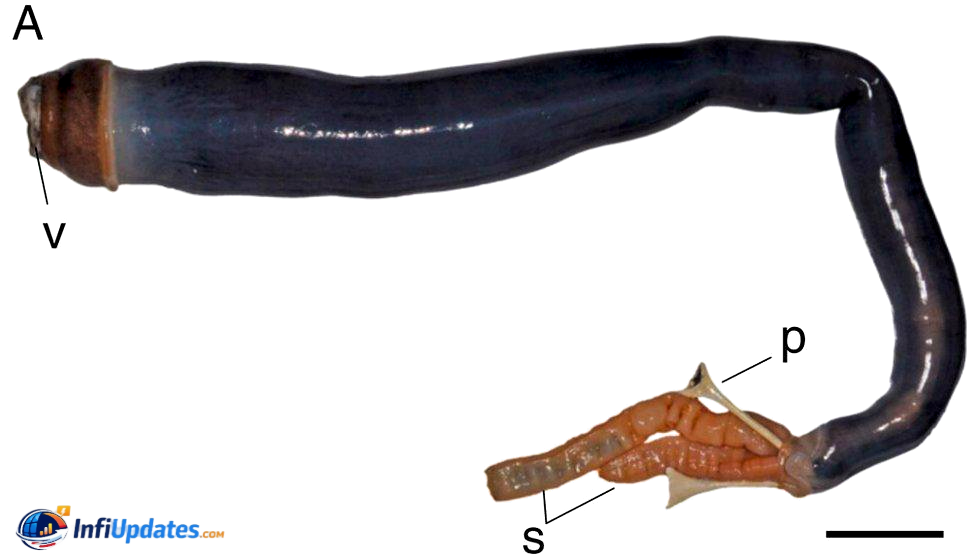
Known scientifically as Kuphus polythalamia, this unusual marine creature can grow to lengths of over a meter. And unlike typical shipworms that burrow into wooden hulls, this species prefers living inside thick, chalky tubes buried in mud.
When scientists finally studied it in detail, they were astonished.
Not a Worm at All
Despite its name, the giant shipworm is not a worm. It is actually a type of bivalve mollusk — related to clams and oysters.
Most shipworms bore into submerged wood using small shell structures near their heads. Over time, they create tunnels inside timber, which historically caused damage to ships and docks.
But the giant shipworm breaks the mold.
Instead of boring through wood, it lives inside a long, hard tube made of calcium carbonate. The tube anchors into soft marine sediment, often in mangrove swamps.
When removed from its tube, its long, dark, tubular body appears almost alien — which explains why some observers might wish it had stayed hidden.
A Discovery Decades in the Making
Although references to the giant shipworm existed in older scientific records, living specimens remained elusive for years.
Eventually, researchers located populations in mangrove regions of the Philippines. The discovery provided an opportunity to understand how this creature survives — and why it is so different from its wood-eating relatives.
Unlike traditional shipworms, Kuphus polythalamia does not rely on digesting wood. Instead, it hosts symbiotic bacteria inside its gills.
Powered by Bacteria
Here’s where the story becomes even more fascinating.
The giant shipworm lives in mud rich in decaying organic matter. That environment produces hydrogen sulfide — a chemical that can be toxic to many organisms.
However, bacteria living within the shipworm convert this chemical into energy through a process similar to chemosynthesis. In simple terms:
- The bacteria process chemicals from the environment
- They create nutrients
- The shipworm benefits from this internal food source
This is similar to how some deep-sea organisms survive near hydrothermal vents, relying not on sunlight but on chemical energy.
A Creature of Quiet Importance
Though it may appear unsettling, the giant shipworm plays a role in its ecosystem.
Mangrove environments are rich, complex habitats that support diverse marine life. By interacting with sediments and hosting unique bacteria, the shipworm contributes to nutrient cycling in these ecosystems.
Understanding such organisms helps scientists study:
- Symbiotic relationships
- Alternative energy systems in nature
- Evolutionary adaptations
- Marine biodiversity
Creatures that look unusual often hold valuable scientific insights.
Why It Captivates Scientists
The giant shipworm challenges assumptions about how life evolves.
Most shipworms evolved to digest wood using specialized enzymes and bacteria. Kuphus polythalamia, however, appears to have taken a different evolutionary path — shifting from wood consumption to chemical-based survival.
This adaptation demonstrates nature’s flexibility. It also raises questions about how environmental pressures shape biological innovation.
Beauty in the Unfamiliar
It is easy to react with discomfort when seeing a meter-long, tube-dwelling marine animal. But scientific discovery often begins with curiosity about the unfamiliar.
The giant shipworm reminds us that:
- The ocean still holds many secrets
- Evolution produces surprising solutions
- Appearances can be misleading
What may initially seem unsettling can turn out to be a remarkable example of biological creativity.
“This Is a Giant Shipworm. You May Wish It Had Stayed in Its Tube.” The headline captures the shock of seeing such an unusual organism up close. Yet beyond its striking appearance lies a story of adaptation, symbiosis, and scientific discovery.
Far from being a creature of nightmares, the giant shipworm represents the complexity and diversity of marine life. It challenges our expectations and expands our understanding of how life thrives in unexpected places.
Sometimes, the strangest organisms teach us the most.