will AI control everything? Is AI dangerous?
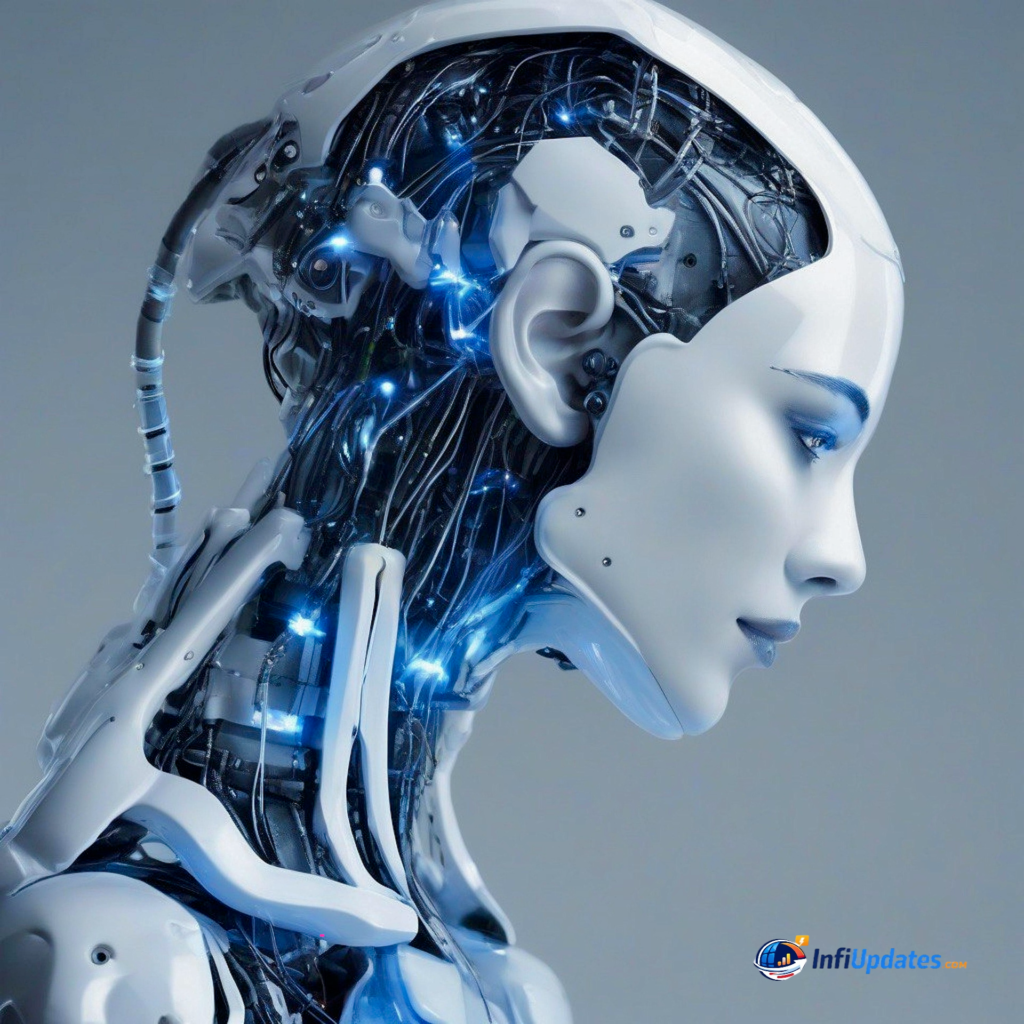
Artificial Intelligence is no longer a concept from science fiction. It writes content, detects diseases, drives cars, powers businesses, and even helps students learn faster. Naturally, this raises a big question in many minds:
Will humans still have work in the future? Or will AI control everything? Is AI dangerous?
These are not foolish fears. They are important conversations. But instead of reacting emotionally, we need to look at the future realistically — with clarity, balance, and logic.
Let’s explore this properly.
Will Humans Still Have Work in the Future?
The short answer: Yes. But the nature of work will change.
History gives us perspective.
- When machines were introduced during the Industrial Revolution, people feared mass unemployment.
- When computers entered offices, many thought clerical jobs would disappear entirely.
- When the internet arrived, businesses feared disruption.
What actually happened?
Old jobs reduced.
New jobs were created.
Skills evolved.
AI is following a similar pattern.
Jobs That May Reduce
AI can automate:
- Repetitive data entry
- Basic customer support
- Simple content generation
- Routine manufacturing tasks
These roles may shrink over time.
Jobs That Will Grow
But new opportunities are emerging:
- AI engineers
- Data analysts
- Automation specialists
- AI ethics advisors
- Creative directors using AI tools
- Cybersecurity professionals
Most importantly, human skills like:
- Critical thinking
- Emotional intelligence
- Leadership
- Creativity
- Complex decision-making
will become more valuable, not less.
AI can process information quickly.
But it does not have human intuition, lived experience, or moral judgment.
The future will likely belong to humans who know how to work with AI, not compete against it.
Will AI Control Humans?
This idea often comes from movies and dramatic headlines. But in reality, AI does not have independent desire or ambition.
AI systems:
- Do not have emotions
- Do not have personal goals
- Do not seek power
- Operate within programmed boundaries
They are tools created and controlled by humans.
However, there is a valid concern: who controls the AI systems?
Large corporations and governments develop powerful AI technologies. The risk is not that AI will suddenly become “self-ruling,” but that misuse or poor regulation could create imbalance.
That is why discussions about:
- Ethical AI development
- Transparency
- Responsible deployment
- Legal frameworks
are extremely important.
AI should remain a tool — not an unchecked authority.
Are There Real Dangers of AI?
Yes. Like any powerful technology, AI has risks. Ignoring them would be irresponsible.
1. Job Displacement
As mentioned earlier, automation may replace certain roles faster than people can retrain. This could increase short-term unemployment in some sectors.
Governments and companies must invest in reskilling programs to prevent economic imbalance.
2. Misinformation and Deepfakes
AI can generate realistic images, videos, and text. This opens the door for:
- Fake news
- Deepfake videos
- Manipulated media
If not regulated properly, this can damage public trust.
Digital literacy will become essential in the coming years.
3. Privacy Concerns
AI systems rely heavily on data. Poor data handling practices can lead to privacy risks.
Strong data protection laws and ethical standards are necessary to protect individuals.
4. Overdependence
One subtle risk is psychological. If humans rely too heavily on AI for thinking, planning, or creativity, critical thinking skills may weaken over time.
Technology should support intelligence — not replace it.
The Positive Side of AI
While fears exist, the benefits are enormous.
In Healthcare
AI assists in:
- Early disease detection
- Medical imaging analysis
- Drug research
- Personalized treatment plans
This can save lives.
In Education
AI-powered systems:
- Provide personalized learning paths
- Help students understand complex subjects
- Offer global access to information
This reduces educational inequality.
In Business and Innovation
AI improves:
- Efficiency
- Decision-making
- Market analysis
- Automation
It allows startups to scale faster and large companies to operate smarter.
The Real Future – Collaboration, Not Domination
The most realistic future scenario is not “AI ruling humans” nor “humans rejecting AI.”
It is collaboration.
Humans provide:
- Values
- Ethics
- Vision
- Creativity
AI provides:
- Speed
- Pattern recognition
- Data processing
- Automation
Together, they can achieve more than either could alone.
Think of AI as a powerful engine.
But humans remain the drivers.
What Should Individuals Do?
Instead of fearing AI, prepare for it.
- Learn digital skills.
- Understand how AI tools work.
- Develop creativity and problem-solving abilities.
- Focus on communication and emotional intelligence.
These skills cannot easily be automated.
Adaptation has always been humanity’s strength.
Final Thoughts
AI is not a monster.
It is not a savior either.
It is a powerful technology created by humans.
Like electricity, the internet, or smartphones, it can be used wisely or poorly. The outcome depends not on the machine — but on the people guiding it.
The future will still have work.
It will still need human leadership.
It will still depend on ethics and responsibility.
AI will not replace humanity.
But humanity will change — and those who adapt will thrive.
The question is not “Will AI rule us?”
The real question is:
Are we ready to guide it responsibly?